Platform comparison
| Platform | YES odds | NO odds | Fee | KYC | Settlement | |
|---|---|---|---|---|---|---|
Polymarket (via Election Predictions UK) Pick polygram.ink (preferred broker) |
26% | 74% | 0% (USDC on-chain) | No-KYC up to $1,500 | USDC, auto via UMA oracle | Trade this market → |
Polymarket (direct) polymarket.com |
26% | 74% | 0% | Geo-blocked in US/UK/EU | USDC, on-chain | Trade this market → |
Kalshi kalshi.com |
— | — | Up to 7% per trade | US-only, KYC required | USD | Trade this market → |
Betfair Exchange betfair.com |
— | — | 2-5% commission | Full KYC from first trade | GBP / EUR | Trade this market → |
Manifold Markets manifold.markets |
— | — | Play-money (mana) | None — play-money | Mana (no cash-out) | Trade this market → |
Outcome probabilities
Current market-implied probability for each outcome, from the live order book.
| Outcome | Probability |
|---|---|
| December 31 | 26% |
| August 31 | 20% |
| July 31 | 14% |
| July 17 | 12% |
Market context
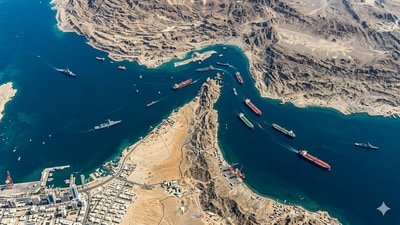
The question centres on whether the United States will impose and collect transit fees or tolls on shipping passing through the Strait of Hormuz by the end of 2026. Such a scheme would represent a significant departure from post-war maritime practice, where freedom of navigation has been upheld as a core principle of international law. The Strait remains one of the world's most critical chokepoints, with roughly one-fifth of global oil passing through it daily. Any US attempt to monetise passage would require either unilateral assertion of authority or negotiated agreements with shipping firms and flag states.
Historical precedent offers limited guidance. The US has never successfully levied transit fees on the Strait, though it has periodically increased naval presence and protection operations there without direct compensation schemes. The closest analogue is the 2020 Trump administration's pressure on Gulf allies to fund regional security operations, which yielded modest burden-sharing agreements rather than formal toll collection. Current 13% probability reflects scepticism about political feasibility and international legal standing.
Traders should monitor statements from the incoming administration regarding maritime policy and burden-sharing with allies, particularly following any escalation in regional tensions or attacks on shipping. Congressional debate over defence spending and cost-recovery mechanisms will signal appetite for such schemes. Recent reporting on Trump's second-term foreign policy indicates renewed focus on extracting payments from allies for security provision, though application to international waters remains legally contested. Any formal proposal would likely emerge through defence department announcements or State Department negotiations with major shipping nations and Gulf states.
Methodology
This page tracks US charges Hormuz fees by 2026? across four political prediction venues. Live odds come from the Polymarket order book (the deepest political prediction-market book). Kalshi is the CFTC-regulated US alternative, Betfair the established UK sports-exchange with politics markets, Manifold the open play-money variant. For users geo-blocked from Polymarket directly, brokers like Election Predictions UK provide a 0%-fee route into the same order book.
Resolution & payout
For political markets the resolution source is decisive. Polymarket defines a concrete source per contract (e.g. AP, Reuters, official electoral commission) and uses the UMA Optimistic Oracle as the on-chain dispute mechanism. With a clearly defined outcome the USDC payout lands within minutes of the final confirmation.
FAQ
- What resolution source is used for elections?
- Polymarket defines the source per contract — usually Associated Press (AP Race Call), Reuters or the official electoral commission. The source is stated in contract details before the market opens.
- Which platform has the deepest political liquidity?
- Polymarket — by far. US 2024 presidential volume was ~$3.5B vs Kalshi (~$200M) and Betfair (~$120M). Where Polymarket is geo-blocked, brokers like Election Predictions UK route into the same order book at 0% fees.
- Are political prediction markets legal in my country?
- It varies. They sit in legal gray areas in most jurisdictions. Polymarket is geo-blocked from US/UK/EU; some broker frontends have a different geo footprint. Trade only with capital you can afford to lose, and only if you understand the legal status in your jurisdiction.
- Why do Polymarket and Kalshi differ on elections?
- Kalshi must follow CFTC compliance — strict definitions, clear resolution sources, US citizens only with KYC. Polymarket operates globally without CFTC oversight — deeper liquidity, but also higher regulatory risk.
- Which political events have the biggest volume?
- US Presidential election, party nominations (DNC/RNC), Senate majorities, individual state outcomes (Pennsylvania, Michigan, Wisconsin), and major European elections. Peak markets reach $50-500M per event.
%22%2F%3E%3Cpath%20d%3D%22M%206%2066%20A%2026%2026%200%200%201%2058%2066%22%20fill%3D%22%23E6B98D%22%20opacity%3D%220.9%22%2F%3E%3Ccircle%20cx%3D%2232%22%20cy%3D%2226%22%20r%3D%2222%22%20fill%3D%22%23F5CBA7%22%2F%3E%3Crect%20x%3D%2210%22%20y%3D%224%22%20width%3D%2244%22%20height%3D%2214%22%20rx%3D%227%22%20fill%3D%22%2365a30d%22%20opacity%3D%220.9%22%2F%3E%3Crect%20x%3D%228%22%20%20y%3D%2218%22%20width%3D%228%22%20%20height%3D%2218%22%20rx%3D%224%22%20fill%3D%22%2365a30d%22%20opacity%3D%220.7%22%2F%3E%3Crect%20x%3D%2248%22%20y%3D%2218%22%20width%3D%228%22%20%20height%3D%2218%22%20rx%3D%224%22%20fill%3D%22%2365a30d%22%20opacity%3D%220.7%22%2F%3E%3C%2Fsvg%3E) and
and%22%2F%3E%3Cpath%20d%3D%22M%206%2066%20A%2026%2026%200%200%201%2058%2066%22%20fill%3D%22%23E6B98D%22%20opacity%3D%220.9%22%2F%3E%3Ccircle%20cx%3D%2232%22%20cy%3D%2226%22%20r%3D%2222%22%20fill%3D%22%23F5CBA7%22%2F%3E%3Cpath%20d%3D%22M%2010%2026%20A%2022%2028%200%200%201%2054%2026%22%20fill%3D%22%2365a30d%22%20opacity%3D%220.9%22%2F%3E%3C%2Fsvg%3E)
Trade US charges Hormuz fees by 2026? on Election Predictions UK
Live order book, 0% fees, USDC settlement in seconds.
Open live market →