Platform comparison
| Platform | YES odds | NO odds | Fee | KYC | Settlement | |
|---|---|---|---|---|---|---|
Polymarket (via Election Predictions UK) Pick polygram.ink (preferred broker) |
50% | 50% | 0% (USDC on-chain) | No-KYC up to $1,500 | USDC, auto via UMA oracle | Trade this market → |
Polymarket (direct) polymarket.com |
50% | 50% | 0% | Geo-blocked in US/UK/EU | USDC, on-chain | Trade this market → |
Kalshi kalshi.com |
— | — | Up to 7% per trade | US-only, KYC required | USD | Trade this market → |
Betfair Exchange betfair.com |
— | — | 2-5% commission | Full KYC from first trade | GBP / EUR | Trade this market → |
Manifold Markets manifold.markets |
— | — | Play-money (mana) | None — play-money | Mana (no cash-out) | Trade this market → |
Outcome probabilities
Current market-implied probability for each outcome, from the live order book.
| Outcome | Probability |
|---|---|
| Player G | 50% |
| Player H | 50% |
| Player Q | 50% |
| Player R | 50% |
| Player AA | 50% |
| Player AB | 50% |
| Player AG | 50% |
| Player AO | 50% |
| Player AP | 50% |
| Player A | 50% |
| Player B | 50% |
| Player I | 50% |
| Player J | 50% |
| Player K | 50% |
| Player L | 50% |
| Player S | 50% |
| Player T | 50% |
| Player U | 50% |
| Player V | 50% |
| Player AC | 50% |
| Player AD | 50% |
| Player AE | 50% |
| Player AF | 50% |
| Player AH | 50% |
| Player AI | 50% |
| Player AQ | 50% |
| Player AR | 50% |
| Player AS | 50% |
| Player AT | 50% |
| Player E | 50% |
| Player F | 50% |
| Player O | 50% |
| Player P | 50% |
| Player Y | 50% |
| Player Z | 50% |
| Player AK | 50% |
| Player AM | 50% |
| Player AN | 50% |
| Player AW | 50% |
| Player AX | 50% |
| Player C | 50% |
| Player D | 50% |
| Player M | 50% |
| Player N | 50% |
| Player W | 50% |
| Player X | 50% |
| Player AJ | 50% |
| Player AL | 50% |
| Player AU | 50% |
| Player AV | 50% |
| Other | 50% |
| Cameron Boozer | 22% |
| AJ Dybantsa | 18% |
| Caleb Wilson | 18% |
| Darryn Peterson | 16% |
| Darius Acuff Jr. | 12% |
| Mikel Brown Jr. | 6% |
| Keaton Wagler | 5% |
| Yaxel Lendeborg | 2% |
| Brayden Burries | 1% |
| Nate Ament | 1% |
| Joshua Jefferson | 0% |
| Kingston Flemings | 0% |
| Morez Johnson Jr. | 0% |
| Hannes Steinbach | 0% |
| Christian Anderson | 0% |
| Allen Graves | 0% |
| Cameron Carr | 0% |
| Alex Karaban | 0% |
| Koa Peat | 0% |
| Bennett Stirtz | 0% |
| Karim López | 0% |
| Sergio De Larrea | 0% |
| Tarris Reed Jr. | 0% |
| Dailyn Swain | 0% |
| Jayden Quaintance | 0% |
| Zuby Ejiofor | 0% |
| Aday Mara | 0% |
| Ebuka Okorie | 0% |
| Labaron Philon Jr. | 0% |
| Chris Cenac Jr. | 0% |
Market context
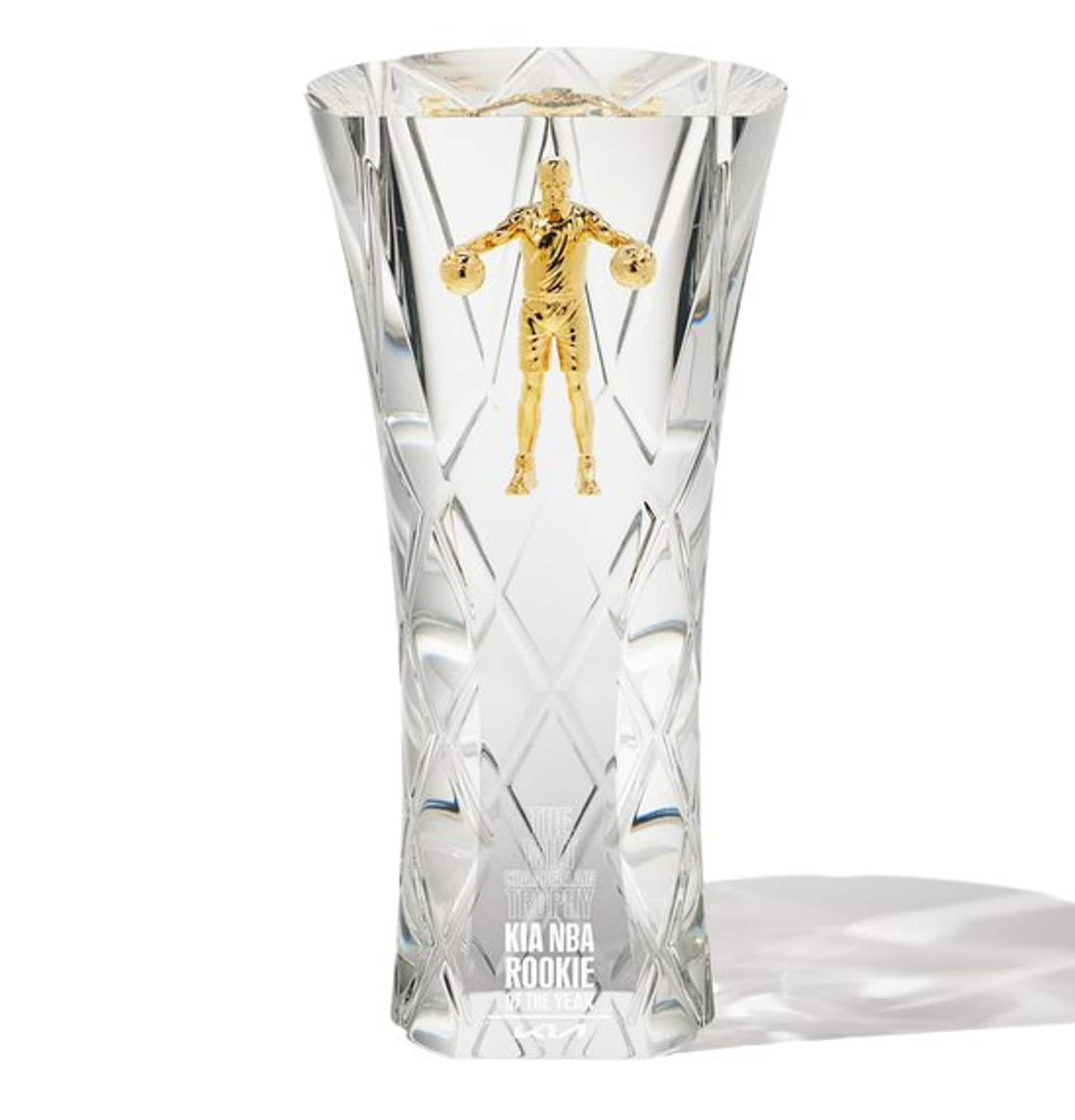
The real-world event determining this market is the winner of the 2026–27 NBA Rookie of the Year award, a title decided by a panel of sportswriters and broadcasters after the regular season concludes in May 2027. Current crowd-implied probability sits at 0% for the leading outcome, yet sportsbooks and prediction markets like Polymarket identify Cameron Boozer of the Memphis Grizzlies as the frontrunner, assigning him odds of +250 and a 21% market share respectively[1][2]. This divergence between the zero-per-cent crowd view and the positive odds at major books suggests a significant lag in sentiment adjustment rather than a fundamental lack of a viable candidate.
Historically, the award has frequently favoured third-overall picks or players landing in high-usage roles over the top draft selection, a pattern seen when Boozer eclipses first-pick AJ Dybantsa in early betting lines[1]. Unanimous winners are rare, with only six players capturing all first-place votes since 1980, including Victor Wembanyama last season, indicating that even dominant rookies face split voting[4]. The current probability of 0% ignores this historical precedent where third picks like Boozer often outperform top picks due to immediate team reliance, framing the zero figure as an outlier rather than a reflection of the actual competitive landscape.
Traders should monitor the Grizzlies' preseason roster announcements and Boozer’s official role declaration, as his status as a go-to player in Memphis is the primary catalyst for his odds[3]. Key dates include the start of the 2026–27 season in October and the NBA Draft Combine results, which may shift perceptions of depth in the rookie class[2]. Recent news from CBS Sports confirms Boozer’s immediate integration into the Grizzlies’ core, making his preseason performance the critical variable to watch[3]. The market leans heavily on this team-usage catalyst, with any delay in his role confirmation likely to sustain the current zero-per-cent crowd probability until early-season data emerges.
Methodology
This page tracks NBA: 2026-27 Rookie of the Year across four political prediction venues. Live odds come from the Polymarket order book (the deepest political prediction-market book). Kalshi is the CFTC-regulated US alternative, Betfair the established UK sports-exchange with politics markets, Manifold the open play-money variant. For users geo-blocked from Polymarket directly, brokers like Election Predictions UK provide a 0%-fee route into the same order book.
Resolution & payout
Political markets typically settle on official candidate or agency confirmation. Polymarket uses UMA Optimistic Oracle: a proposer posts the outcome with a bond, the two-hour window opens, then the smart contract pays USDC.
Kalshi settles USD via CFTC clearinghouse, with clearly defined resolution sources (e.g. AP race calls for elections). Betfair settles after the official outcome is registered with the league or agency. Manifold is play-money.
FAQ
- What resolution source is used for elections?
- Polymarket defines the source per contract — usually Associated Press (AP Race Call), Reuters or the official electoral commission. The source is stated in contract details before the market opens.
- Can prediction markets influence election outcomes?
- Markets reflect expectations rather than create them. Studies show public-facing markets can anchor expectations, but don't influence the underlying outcome. Political markets are information, not advocacy.
- How fast do political markets react to news?
- High-liquidity markets move within seconds to minutes. A Trump tweet on the economy can shift the "Trump 2024" market 2-5 points before mainstream media has written anything.
- Are political prediction markets legal in my country?
- It varies. They sit in legal gray areas in most jurisdictions. Polymarket is geo-blocked from US/UK/EU; some broker frontends have a different geo footprint. Trade only with capital you can afford to lose, and only if you understand the legal status in your jurisdiction.
- Which political events have the biggest volume?
- US Presidential election, party nominations (DNC/RNC), Senate majorities, individual state outcomes (Pennsylvania, Michigan, Wisconsin), and major European elections. Peak markets reach $50-500M per event.
%22%2F%3E%3Cpath%20d%3D%22M%206%2066%20A%2026%2026%200%200%201%2058%2066%22%20fill%3D%22%23E6B98D%22%20opacity%3D%220.9%22%2F%3E%3Ccircle%20cx%3D%2232%22%20cy%3D%2226%22%20r%3D%2222%22%20fill%3D%22%23F5CBA7%22%2F%3E%3Crect%20x%3D%2210%22%20y%3D%224%22%20width%3D%2244%22%20height%3D%2214%22%20rx%3D%227%22%20fill%3D%22%2365a30d%22%20opacity%3D%220.9%22%2F%3E%3Crect%20x%3D%228%22%20%20y%3D%2218%22%20width%3D%228%22%20%20height%3D%2218%22%20rx%3D%224%22%20fill%3D%22%2365a30d%22%20opacity%3D%220.7%22%2F%3E%3Crect%20x%3D%2248%22%20y%3D%2218%22%20width%3D%228%22%20%20height%3D%2218%22%20rx%3D%224%22%20fill%3D%22%2365a30d%22%20opacity%3D%220.7%22%2F%3E%3C%2Fsvg%3E) and
and%22%2F%3E%3Cpath%20d%3D%22M%206%2066%20A%2026%2026%200%200%201%2058%2066%22%20fill%3D%22%23E6B98D%22%20opacity%3D%220.9%22%2F%3E%3Ccircle%20cx%3D%2232%22%20cy%3D%2226%22%20r%3D%2222%22%20fill%3D%22%23F5CBA7%22%2F%3E%3Cpath%20d%3D%22M%2010%2026%20A%2022%2028%200%200%201%2054%2026%22%20fill%3D%22%2365a30d%22%20opacity%3D%220.9%22%2F%3E%3C%2Fsvg%3E)
Trade NBA: 2026-27 Rookie of the Year on Election Predictions UK
Live order book, 0% fees, USDC settlement in seconds.
Open live market →